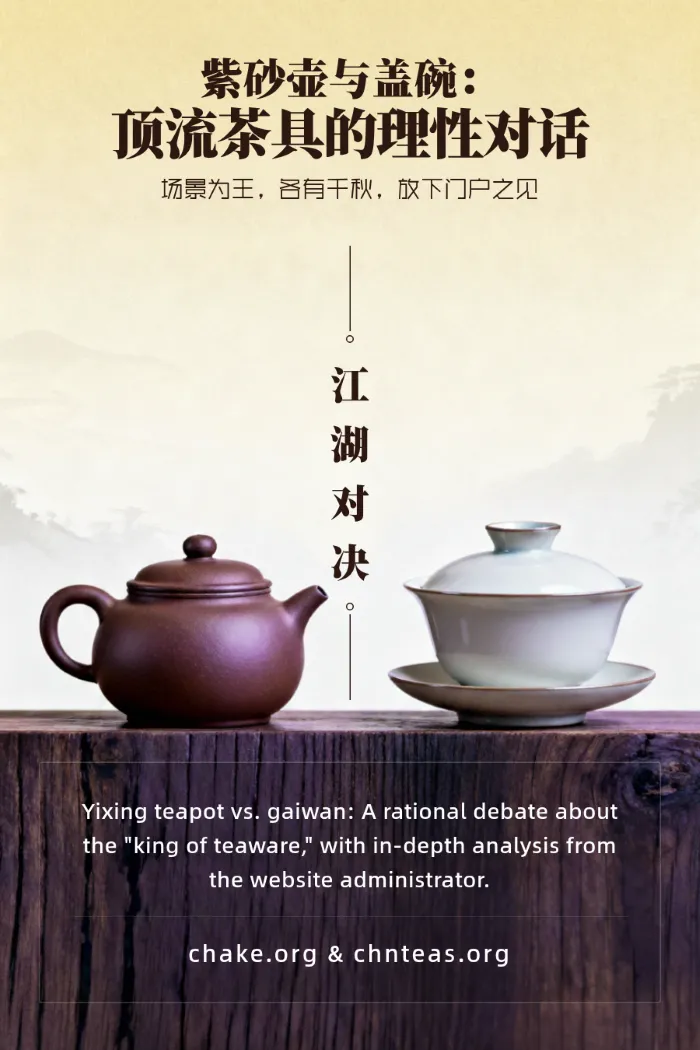
Hello, tea friends. This is your curator. In the world of tea ware, the “Zisha Teapot” (Yixing teapot) and the “Gaiwan” are undoubtedly two top masters, each with a massive following. A common debate is: “For brewing tea, is a Zisha teapot always better than a Gaiwan?” Today, as the curator of this tea culture platform, I must state categorically: This is a classic “false dilemma.” Zisha teapots and Gaiwans are not about “better or worse,” but about “matching characteristics with scenarios.” They are like two legendary swords, each with its own strength; the key lies in how the wielder uses them. Let’s set aside preconceptions for a deep, rational comparison.
1. Core Characteristics Showdown: The “Philosophy” of Material
To understand their differences, one must first read their material and design language.
Zisha Teapot: The “Breathing” Sculptor of Time
- Material: Its unique double-porosity structure (open and closed pores) gives the body a degree of breathability without being water-permeable. This leads to two core characteristics: Adsorptivity and Nurturing Potential.
Advantages:
- Softens Water, Mellows Taste: Can adsorb some of the rough edges in tea liquor (e.g., some astringency), making the soup taste mellower and smoother. Especially suitable for Pu-erh, aged teas, dark teas.
- Retains Heat, Activates Aroma: Good heat retention, beneficial for teas requiring high-temperature steeping to continuously release compounds.
- “One Pot for One Tea,” Grows More Precious: With long-term use and care, tea compounds build up inside the pot (“tea patina”), potentially allowing the empty pot to retain fragrance. It imbues the ware with unique life and sentimental value.
Gaiwan: The Impartial “Glass Judge”
- Material: Primarily porcelain (white, celadon, etc.), dense texture, smooth glazed surface, does not absorb smells or compete with aromas.
Advantages:
- Presents the Tea’s “True Self”: Due to its inert material, it most truthfully and unreservedly reveals a tea’s innate aroma, flavor, strengths, and weaknesses. It is the unrivaled choice for evaluation, tasting, and learning.
- Precise, Controlled Pouring: The large opening allows flexible control over pouring speed and flow via the lid-bowl gap, enabling precise mastery of each infusion’s strength.
- Easy to Clean, Versatile: Extremely easy to clean after brewing, leaving no stains or odors. Can immediately brew a completely different tea next, with no cross-contamination.
2. Scenario & Tea Compatibility Map
Discussing superiority without context is meaningless. Here is your curator’s compatibility guide:
| Consideration | Recommended: Zisha Teapot | Recommended: Gaiwan | Core Reasoning |
|---|---|---|---|
| Tea Type | Fermented & Aged Teas: Pu-erh (esp. ripe), Dark Tea, Aged White Tea, some heavily roasted Oolongs (e.g., aged Yancha). | High-Aroma & Fresh Teas: Green Tea, Yellow Tea, light-fermentation Oolongs (Tieguanyin, High-Mountain Tea), new White Tea, Black Tea (when appreciating floral/fruity notes). | Zisha mellows; Gaiwan highlights bright aroma and freshness. |
| Purpose | Daily enjoyment, savoring mellowed taste, appreciating and nurturing the pot. | Professional evaluation, study and tasting, comparing multiple teas, pursuing the tea’s essential flavor. | Zisha focuses on experience & nurturing; Gaiwan on objectivity & efficiency. |
| Occasion | Personal or small-group mindful, slow sipping, emphasizing ritual and connection. | Tea gatherings, competitions, demonstrations, rapid consecutive brewing sessions. | Zisha suits immersive experience; Gaiwan suits presentation & efficient operation. |
| User | Enthusiasts with some experience, willing to dedicate focus to “nurturing” a pot. | Beginners (easy to observe leaves, control water), seasoned connoisseurs (for precise judgment). | Zisha requires knowledge to avoid “flavor mixing”; Gaiwan has low barrier, high ceiling. |
3. Dispelling Myths: The “Legends” and “Traps” of Zisha Teapots
- Myth 1: “Zisha can transform bad tea into good.” Brewing low-quality tea in Zisha won’t make it good. It modifies and optimizes but cannot change essence. Good tea is the foundation.
- Myth 2: “Zisha makes all teas taste better.” For teas prized for freshness and floral aroma (e.g., premium Longjing, Fenghuang Dancong), the adsorptive nature of Zisha can diminish their signature high notes, doing more harm than good.
- Trap: “Chemical/Inferior Clay Pots”: Market irregularities require vigilance. Inferior pots offer no benefit and may even be harmful. Purchase from reputable sources and artists.
4. The Curator’s Ultimate Selection Guide & Advice
How to choose? Follow this philosophy:
- “Match the Ware to the Tea” is the Golden Rule: Always choose your primary tea ware based on the tea you drink most often and value most. Drink Pu-erh often? Lean Zisha. Drink Oolongs/Greens often? Lean Gaiwan.
- “Functional Complementation” is Wisdom: A seasoned tea lover’s table often features both. Use Gaiwan for trying new teas, appreciating aroma; use Zisha for serving aged teas, daily enjoyment.
- “Fitness for Purpose” is Fundamental: Set aside vanity and one-upmanship. A high-quality white porcelain Gaiwan around a hundred RMB may be functionally superior to an inferior or mismatched Zisha teapot.
- “Harmony Between User and Tool” is the Goal: Ultimately, tea ware is an extension of your hand. Whether it’s the Gaiwan’s precision or the Zisha’s warmth, the one that feels natural, comfortable, and enhances your enjoyment of the brewing process is the “better” one for you.
Summary: The Curator’s Philosophy on Tea Ware
Returning to the initial question: Is a Zisha teapot always better than a Gaiwan? The answer is unequivocally: Not necessarily, and they simply cannot be compared so simplistically.
- The Zisha Teapot is a “Companion.” It asks for your time, attention, and affection. It grows with you, jointly “nurturing” a cup of mellow liquor. Its value accumulates over time.
- The Gaiwan is a “Precision Tool.” It is calm, objective, and efficient. It helps you discern the tea’s true taste and precisely control each infusion’s evolution. It is a reliable instrument for exploring the world of tea.
The Curator’s final words are: In the practice of the tea way, we should seek “the ware serves the tea, the tea pleases the person.” Do not fixate on a single tool’s “throne.” Instead, broaden your perspective to appreciate the beauty of different vessels, allowing them to provide the most fitting service for you and your tea in different moments. True “goodness” lies not in the inherent prestige of the ware, but in that perfect默契/tacit understanding between it, the tea, and you.
