Hello friends who are just beginning to explore the world of tea. This is your curator. As your interest in tea deepens, it's natural for your gaze to be drawn to an object shrouded in mystique and cultural aura—the Zisha (Yixing) teapot. This leads to a classic question: “As a complete beginner, am I suitable to start using a Zisha teapot right away?” My answer, which may surprise some, comes from sincere experience: For a pure novice, a Zisha teapot is not the ideal “first” tea ware; however, it can be a worthy “milestone” to anticipate on your tea journey. Today, your curator, speaking as someone who has been there, will thoroughly explain the pros, cons, and the rational path forward.
1. Why Are Beginners Drawn to Zisha Teapots?
Understanding this allure is the first step to a rational decision.
- Cultural Aura & Identity: Zisha teapots carry a profound legacy of scholarly aesthetics and craftsmanship, often hailed as the “king of tea ware.” Owning one seems to bring you closer to the identity of a “tea connoisseur.”
- Attraction of Functional Myths: Legends about their ability to “soften water,” “enhance the tea soup,” and “increase in value with use” lead beginners to hope for a magic tool that instantly upgrades their brewing experience.
- Beauty & The Joy of Appreciation: Their warm texture,古朴/simple and elegant forms, and the joy of nurturing them through use offer aesthetic and emotional appeal far beyond ordinary utensils.
2. Why Is Directly Using a Zisha Teapot Challenging for Beginners? (Curator's Emphasis)
The ideal is丰满/plump, but reality can be骨感/bony. Beginners using Zisha teapots directly face four core challenges:
High Knowledge Barrier, High Risk of “Paying Tuition Fees”:
- Deep Waters of Clay: Chemical clay, outer-mountain clay, blended clay... For beginners without discernment, the risk of buying harmful or inferior pots is extremely high.
- Complex Craftsmanship: Fully handmade, half-handmade, machine-made, slip-cast—the prices vary enormously. Beginners are easily misled into paying a high price for low quality.
- Chaotic Market: Inflated artisan titles, rampant代工/ghost production, and营销/storytelling营销 abound. Pitfalls are everywhere.
High Usage Barrier, Prone to “Basic Mistakes”:
- The “One Pot, One Tea” Rule: The double-porosity structure of Zisha absorbs flavors and aromas. If a beginner uses one pot for green tea today and Pu-erh tomorrow, it will lead to flavor mixing, ruining both the pot and the tea, resulting in a poor experience.
- Unfamiliar Brewing Skills: Beginners are still摸索/figuring out leaf-to-water ratios, water temperature, and steeping times. Zisha pots pour relatively slowly, and unlike a Gaiwan, they don't allow direct observation of the leaves or smelling the lid aroma, which is不利于/not conducive to learning and establishing correct brewing benchmarks.
- Cumbersome Maintenance: Requires proper initial seasoning, daily careful cleaning, and thorough drying. Improper use can breed bacteria or leave stubborn stains, a more complex process than with a Gaiwan.
Very Low Cost-Effectiveness, Imbalanced Input/Output:
- A Zisha teapot with pure clay and decent craftsmanship starts at several hundred or even over a thousand RMB. As a beginner who hasn't yet确定/identified their favorite tea type and cannot appreciate the subtle improvements a Zisha pot offers, this investment seems large and inefficient at this stage.
Masculinity Masks the Tea's True Character, Hinders Learning:
- The “modifying” effect of Zisha, an advantage for seasoned drinkers, is a disadvantage for beginners needing to establish taste standards. It can mask a tea's strengths and flaws, preventing you from objectively understanding its true flavor profile, thus hindering the learning process.
3. The Curator's Phased Practical Advice: How Should Beginners Approach Zisha?
Don't be discouraged. Your curator has mapped out a rational path from “newbie” to “enthusiast”:
Phase 1: Beginner Entry Period (0-6 Months) — “Favor the Bowl, Set Aside the Pot” – Build Your Foundation
- Core Tools: Acquire a white porcelain Gaiwan (recommended), a glass fairness pitcher, and a few tasting cups. Total budget can be under a hundred RMB.
Core Missions:
- Master Technique: Practice safe, clean pouring with the Gaiwan; not burning your fingers is the primary goal.
- Establish Standards: Use the non-absorbent white porcelain Gaiwan to truly experience the aroma, taste, and layers of different teas, building a correct library of taste memories.
- Identify Preferences: Explore widely to find the 1-2 types of tea you genuinely love and will drink long-term (e.g., Pu-erh or Oolong).
Phase 2: Interest Deepening Period (After 6 Months) — “Qualified to Proceed,” Cautious First Purchase
When you can consistently brew one category of tea well and are sure of your long-term preference, you may consider your first Zisha teapot.
Ironclad Purchasing Rules:
- Choose the Pot for the Tea: Select the pot shape and clay type based on your most frequently drunk tea. E.g., for Pu-erh, choose Zi Ni (purple clay) or Di Cao Qing, with a slightly larger body; for Oolong, choose Zhu Ni (red clay) or Hong Ni, with a smaller body.
- Keep the Shape Simple: Prioritize classic, functional shapes (e.g., Xi Shi, Shi Piao, Fang Gu). Opt for unadorned “plain” pots over complex sculpted ones (which are harder to clean).
- Prioritize Clay Purity: Make “safe, pure clay” the non-negotiable first requirement, not chasing the artist's title. Choose reputable sellers or channels. It's better to buy a good clay pot from an unknown artisan than a “titled pot” surrounded by dubious stories.
- Set a Budget Cap: For your first pot, set the budget within a comfortable range. The goal is to experience the clay and craftsmanship, not for investment or collection.
Usage Rules:
- Strictly Adhere to “One Pot, One Tea”: Be faithful to one tea type. Never mix.
- Properly Season and Maintain: Season initially with just clean water or by boiling with tea leaves. Reject popular but misguided online methods like using tofu or sugarcane. Clean promptly after use and let it dry completely.
Phase 3: Seasoned Enthusiast Period (Long-term) — “Harmony Between User and Pot,” Advanced Exploration
As your experience accumulates, you will naturally grow to better appreciate, enjoy, and collect. That will be a different, naturally unfolding realm.
4. Ultimate Advice for Beginners Insistent on Using Zisha as Their “First Pot”
If, after reading the above, you still decide to buy a Zisha teapot first, you must remember the Curator's “Three Dos and Three Don'ts”:
- DO prioritize safety, NOT vanity: Make “pure, natural, additive-free clay” your non-negotiable bottom line.
- DO prioritize practicality, NOT flashy skill: Choose a functional shape that pours well, feels comfortable to hold, and is easy to clean.
- DO focus, DON'T be greedy: Choose one type of tea you are sure you will drink long-term and dedicate the pot to it exclusively.
- DON'T pay huge premiums for stories and titles you don't understand.
- DON'T expect it to save low-quality tea.
- DON'T neglect fundamental brewing practice and tea study.
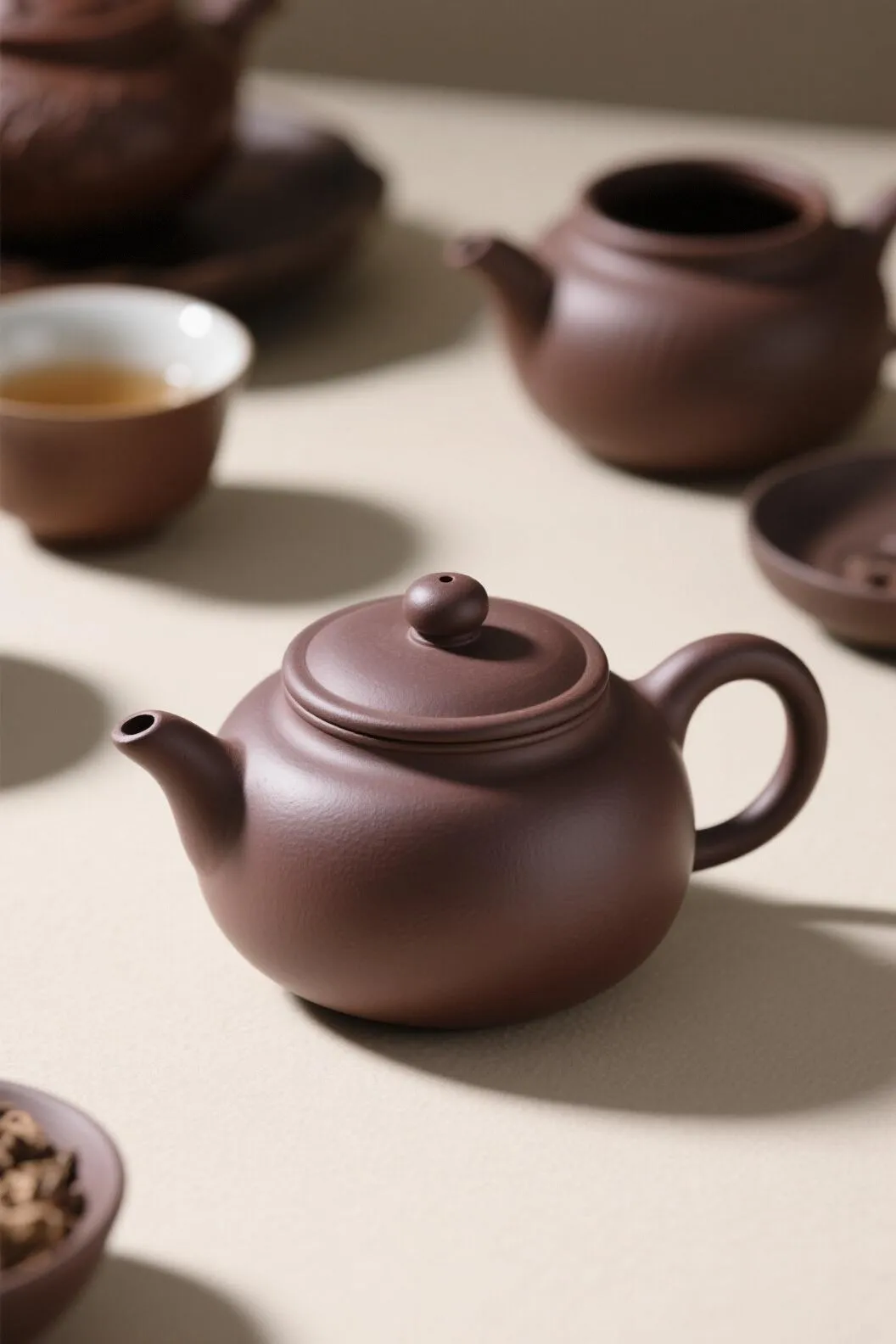
Summary: The Curator's Core Viewpoint
A Zisha teapot is the “trophy” of the tea journey, not the “admission ticket.”
For a beginner, the most urgent task is “learning to drink tea” (understanding tea itself), not “learning to use a fancy pot.” Rushing to use a Zisha teapot is like attempting a marathon before learning to walk—not only is the process painful, but you're also more likely to fall and get hurt (buy the wrong pot, use it wrongly).
Trust your curator. When you truly fall in love with tea through a simple Gaiwan and understand the dialogue between water and leaf, you will naturally know how to choose, appreciate, and cherish a true Zisha teapot. Then, it will become a “good friend” on your tea table that complements and fulfills you, not a confusing and risky “ornament.”
The beauty of the tea way is revealed through gradual, step-by-step progress. May we all advance with this understanding.
