Which Tea Is Completely Non-Fermented? A Webmaster's Guide to Green, White, and Yellow Tea
When tea lovers first start learning about tea, one question comes up often: What exactly is "fermentation" in tea, and which type is completely non-fermented?
Some say it's green tea. Others think white tea. And then yellow tea gets thrown into the mix. The conflicting information can be confusing.
As someone who has answered this question countless times, let me clear it up once and for all. After reading this, you'll be able to explain it with confidence.
I. The Bottom Line: Only Green Tea Is Truly Non-Fermented
Let's be direct: Among the six major tea types, only green tea is truly "non-fermented" in the strict sense.
All other teas, regardless of how light they seem, undergo some degree of fermentation:
- Green Tea: 0% fermented—completely non-fermented
- White Tea: 10-20% fermented—lightly fermented
- Yellow Tea: 10-20% fermented—lightly fermented
- Oolong Tea: 30-60% fermented—semi-fermented
- Black Tea (Red Tea): 80-90% fermented—fully fermented
- Dark Tea: 100% fermented—post-fermented
Here's where confusion often creeps in: Many people assume white and yellow teas are also non-fermented because they look similar to green tea. But strictly speaking, they are lightly fermented teas, not "completely non-fermented".
II. The Deep Dive: What Does "Fermentation" Really Mean in Tea?
To understand which tea is non-fermented, we first need to understand what "fermentation" means in the tea world.
1. Tea "Fermentation" Is Actually Oxidation
When beginners hear "fermentation," they often think of microbes—like making bread or brewing alcohol. But tea fermentation is different.
In tea, "fermentation" refers to the oxidation of polyphenols (especially catechins) when they come into contact with air. When tea leaves are damaged, polyphenols react with oxygen, causing the leaves to darken and the flavor to mellow. This process is technically called enzymatic oxidation.
Here's a simple way to remember: Tea fermentation = polyphenols getting oxidized by air.
2. Why Is Green Tea Non-Fermented? Because "Kill-Green" Stops the Enzymes
Green tea stays non-fermented because of a crucial step called "kill-green" (杀青, shā qīng) .
This process uses high heat (pan-firing or steaming) to quickly deactivate the enzymes in the leaves. Without active enzymes, oxidation can't happen. The tea is "frozen" in its fresh, green state.
That's why famous teas like Longjing, Biluochun, Maofeng, and Guapian are all completely non-fermented.
III. Deeper Analysis: If Only Green Tea Is Non-Fermented, What About White and Yellow?
This is where things get tricky. Some sources loosely group green, white, and yellow teas together as "non-fermented teas." But this is a broad category versus strict definition distinction.
1. White Tea: Lightly Fermented, Simplest Process
White tea production is simple: withering + drying. There's no kill-green step. During withering, the leaves naturally undergo mild oxidation. So white tea is fermented, just lightly—typically 10-20%.
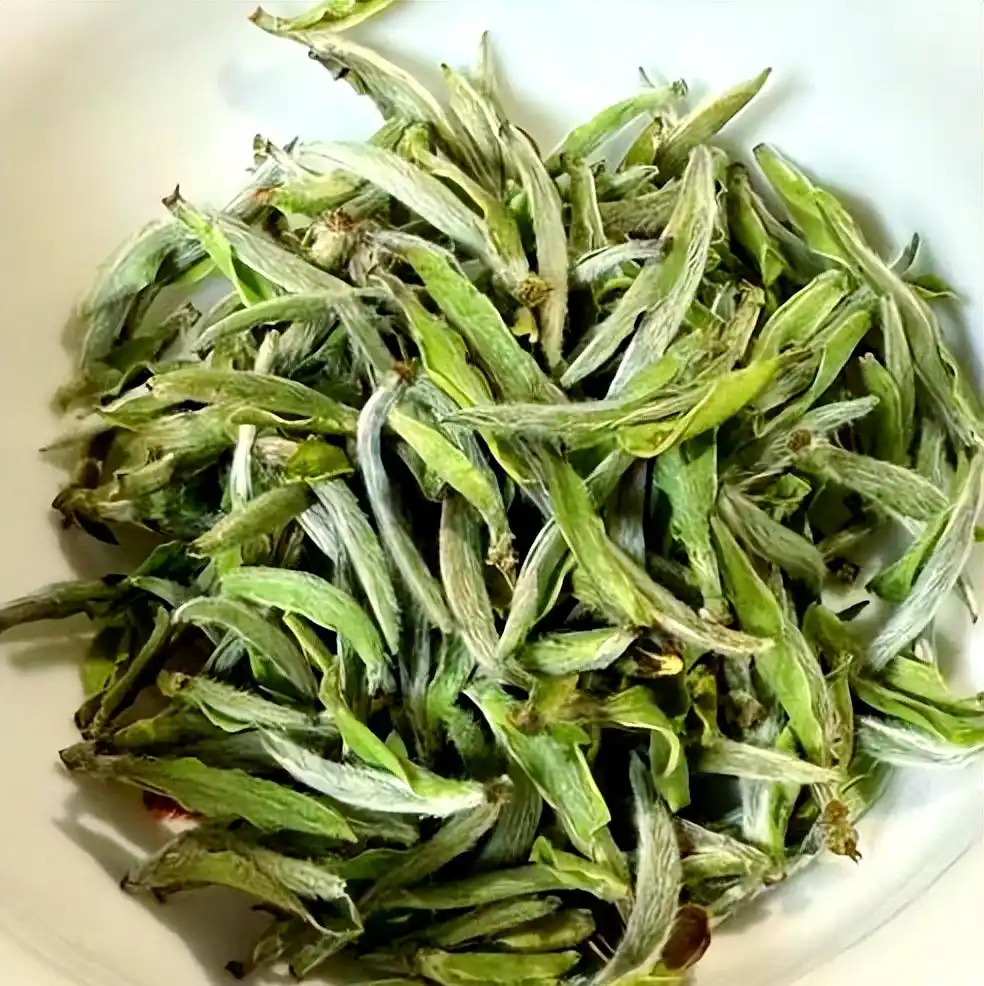
Famous white teas: Silver Needle (Baihao Yinzhen), White Peony (Baimudan), Shoumei, Gongmei.
2. Yellow Tea: Lightly Fermented, with a "Yellowing" Step
Yellow tea processing is similar to green tea, but with an extra step: "yellowing" (闷黄, mēn huáng) . After kill-green or rolling, the leaves are wrapped or covered to allow a slow, moist heat reaction that turns the leaves yellow. This is its fermentation process.
Famous yellow teas: Junshan Yinzhen, Huoshan Huangya, Mengding Huangya.
So, both white and yellow teas have their own fermentation processes. They are not "completely non-fermented."
IV. A Webmaster's "One-Line Memory Aid"
To help you remember the difference between these three similar-looking teas:
- Green Tea (Non-Fermented): Kill-green locks in the green—high heat stops enzymes, keeping it fresh.
- White Tea (Lightly Fermented): Withering does the work—no rolling or firing, just natural, gentle oxidation.
- Yellow Tea (Lightly Fermented): Yellowing turns it yellow—an extra step deliberately creates the yellow color.
Simple, right?
V. What Makes Non-Fermented Green Tea Special? And Who Should Drink It?
Since green tea is the only truly non-fermented tea, what are its unique characteristics?
1. Flavor Profile: Fresh, Bright, Aromatic
Because it's not fermented, green tea retains the most natural compounds from the fresh leaves. It keeps most of its polyphenols, chlorophyll, and vitamins. This gives it that signature fresh, crisp taste, often with subtle bean-like or seaweed-like aromas, and a clear green or greenish-yellow liquor.
2. It's "Cool" in Nature—Not for Everyone
Green tea is considered "cold" in nature. It's great for:
- People with "hot" constitutions who tend to get overheated
- Summer drinking, to cool down
- After a heavy, greasy meal, to cleanse the palate
But it's not suitable for everyone:
- People with weak digestion or "cold" stomachs: Drinking green tea on an empty stomach can cause discomfort
- Those with insomnia or anxiety: Green tea has significant caffeine and can disrupt sleep
- Pregnant women and those with anemia: Should also be cautious
VI. Conclusion
So, back to our original question: Which tea is completely non-fermented?
The answer is clear: Only green tea is truly non-fermented. White and yellow teas, despite their mild character, undergo light fermentation processes and cannot be called "completely non-fermented" in the strict sense.
Why does this matter for your daily tea drinking?
- If you love that crisp, fresh taste and high antioxidant content, green tea is your best choice.
- If you have a sensitive stomach but still want a light tea, white or yellow tea might be better options—they're gentler.
- If someone tells you "white tea is also non-fermented," you can politely explain: "Actually, it's lightly fermented. Only green tea is truly non-fermented."
The world of tea is rich and fascinating. Understanding these basics will give you more confidence when buying and enjoying tea. I hope this guide brings you more clarity and enjoyment on your tea journey.
