Hello, tea friends. This is your curator. In the world of premium black tea, "Jin Jun Mei" is a name that shines brightly yet often causes confusion. The market offers "Jin Jun Mei" at a hundred RMB per jin for daily drinking, and "Zhengshan Jin Jun Mei" that costs tens of thousands and is hard to obtain, with a price gap of hundreds of times. What lies behind this vast chasm? Is it merely marketing hype, or a reflection of real value differentiation? Today, as a curator deeply rooted in the tea industry, I will thoroughly clarify the complex logic behind this, revealing the true cost and value composition of a cup of Jin Jun Mei.
1. The Foundation of Value: Irreplaceable "Pedigree" and "Origin"
The price pyramid of Jin Jun Mei is first built upon the absolute barriers of origin and raw materials.
Core Origin: The "Zhengshan" Gene of Tongmu Guan
- Top-Tier Value Zone: The true birthplace that defined this category is the core area of the Wuyishan National Nature Reserve — Tongmu Guan. Its unique ecosystem (high altitude, cloudy, pristine forest) and endemic "Cai Cha" tea cultivar together create an irreplicable "Zhengshan" terroir aroma (complex floral, fruity, honey notes with a high-mountain rhythm). Pure Tongmu Guan raw material is the cornerstone of Jin Jun Mei's ten-thousand-yuan price tag.
- Outer Regions: "Jin Jun Mei" produced in other towns of Wuyishan City or even other counties in Fujian, while the processing can be imitated, differs essentially in intrinsic quality (aroma, taste, aftertaste) from the "Zhengshan" product, leading to a significant price drop.
Raw Material Grade: The Ultimate Luxury of All Buds
- Top Standard: Authentic Jin Jun Mei strictly uses single buds plucked in spring from native cultivar tea bushes. Tens of thousands of buds are needed to produce one jin of dry tea. The labor cost of hand-picking and the scarcity of the harvesting window already result in very high raw material costs.
- Downgraded Material: Common market products often use mostly single buds with a slight first leaf, or buds from high-yield cultivar bushes from other provinces (e.g., Sichuan, Guizhou). The raw material cost can be several to dozens of times lower, which is the premise for hundred-yuan "Jin Jun Mei".
2. Craftsmanship and Labor: The "Hidden Costs" of Time and Expertise
From fresh leaf to finished tea, processing is the value amplifier and the cost divide.
Precise Control of Innovative Processing
- Jin Jun Mei innovates upon traditional Lapsang Souchong processing (e.g., omitting smoking). Each step—withering, fermentation, drying—requires the tea master to make precise adjustments based on the day's weather and leaf condition, relying on rich experience. This "making tea according to the leaf" artisanal approach is high-skilled labor that cannot be standardized, carrying high added value.
Handmade vs. Mechanized
- High-End Route: Relies entirely or in key steps (like rolling, sorting) on manual work by experienced masters. Yield is extremely low, but the final product has superior appearance and flavor.
- Mass-Market Route: Primarily mechanized and scaled for efficiency and controllable cost, but the flavor tends to be standardized, lacking灵动/liveliness.
3. Brand, Channel, and Market Perception: The "Packaging" and "Bubble" of Price
Leaving the tea garden, tea enters circulation, where its price takes on new definitions.
Brand Premium and Certification Cost
- Jin Jun Mei backed by founding brands like "Zhengshan Tang" represents not only a quality promise but also incorporates the immense costs of brand building, channel maintenance, and traceability certification (e.g., Geographical Indication protection). This is a key reason for its higher price compared to similar products from no-name factories.
Markup Through Distribution Layers
- From tea farmer/factory → primary distributor → regional agent → retailer/e-commerce platform, each link adds a reasonable profit margin. The final retail price is often 2 to 5 times the factory price.
Market Information Asymmetry and Irregularities
- Core Issue: A vast number of products made from non-Tongmu Guan material, not using all buds, or even blended with summer/autumn tea from other regions, are also sold under the name "Jin Jun Mei". Consumers struggle to distinguish, leading to a scenario where "bad money drives out good"—low-priced imitations flood the market, lowering the public's baseline perception of Jin Jun Mei's value.
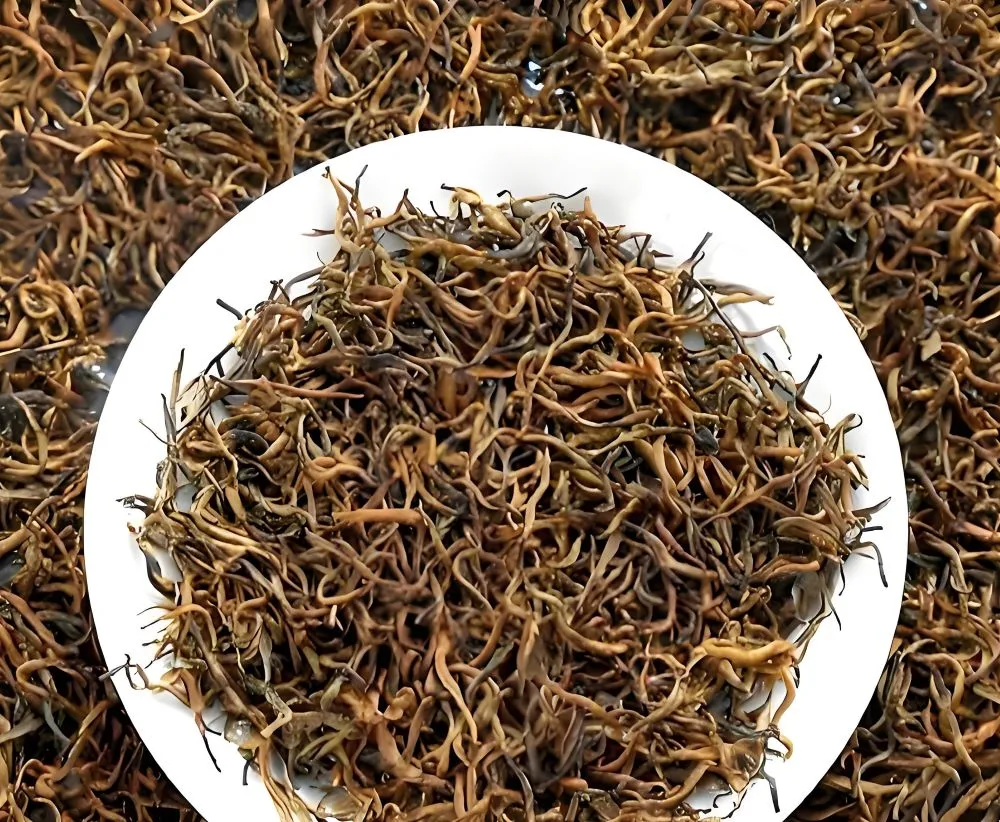
4. How to Assess the Value of Jin Jun Mei? The Curator's Advice
Facing the market, how can we establish our own judgment criteria?
- Observe the Dry Leaves: Top-grade Jin Jun Mei has tight, fine strands with a mix of gold, yellow, and black colors (golden tips are prominent), and high uniformity. Leaves that are all yellow or dark without golden tips are likely imitations.
- Smell the Aroma: Authentic Zhengshan Jin Jun Mei has a clear, elegant, persistent complex aroma of flowers, fruit, and honey (like ripe fruit, fresh flowers, syrup), with a cool, mineral "Yun" (rhythm) from its terroir. Outer mountain tea tends to have a simpler, fleeting aroma, sometimes with green notes or a sweet potato scent (common in high-yield cultivars).
- Taste the Liquor: The infusion should taste fresh,醇厚/mellow,甘/sweet, with a long, lingering甘韵/sweet aftertaste and a noticeable throat feel. Imitations often taste thin, cloyingly sweet (possibly sugared), or astringent, lacking complexity and finish.
- Examine the Spent Leaves: After brewing, the buds should be plump, presenting a bronze color, and feel soft and elastic to the touch. Stiff, dark, or broken leaves indicate lower quality.
- Inquire About Origin: Brands or farmers who clearly state the core origin "Tongmu Guan, Wuyishan" and provide traceable information are more credible. Be cautious of those who only discuss "Jin Jun Mei processing" while being vague about the origin.
Summary: The Curator's Rational Consumption Perspective
The price variation in Jin Jun Mei is the combined result of three factors: "Natural Scarcity" + "Human Skill Value" + "Market Game Price".
- Paying Ten Thousand Yuan: You are purchasing not just a jin of tea, but irreplicable top-tier terroir, extremely scarce material, master-level craftsmanship, and reliable proof of identity. This is a collector's and connoisseur's expenditure.
- Paying a Few Thousand Yuan: You can expect high-quality bud tea from areas near the core origin or outer mountains, with good processing, allowing you to experience the main characteristics of the Jin Jun Mei style. This is an excellent choice for fine drinking.
- Paying a Few Hundred Yuan: What you are likely getting is a mass-market beverage made using the general name "Jin Jun Mei" and common black tea processing. It can satisfy basic demand for "black tea" but should not be expected to deliver the typical韵/Yun of authentic Jin Jun Mei.
The Curator's ultimate advice is: Define your needs, act within your means, and learn to appreciate.
If you are a seasoned tea drinker pursuing the ultimate experience, then paying a premium for authentic Zhengshan Jin Jun Mei is justified. If it's for daily enjoyment, choosing a well-made, clean-tasting "stylized" product is sufficient; there's no need to be obsessed with the name. Most importantly, enhance your own tasting ability, ensuring every penny spent corresponds to a real quality experience.
There is no inherent nobility or baseness in tea; what suits your taste is precious. But to know the true worth of tea is the only way to find what truly "suits your taste." I hope this in-depth analysis serves as a reliable map for your exploration into the world of Jin Jun Mei.
