When people first see Biluochun, they notice its tight, spiral shape.
Why is it rolled like this?
Is it natural or intentional?
Does the shape affect flavor?
Let’s explore.
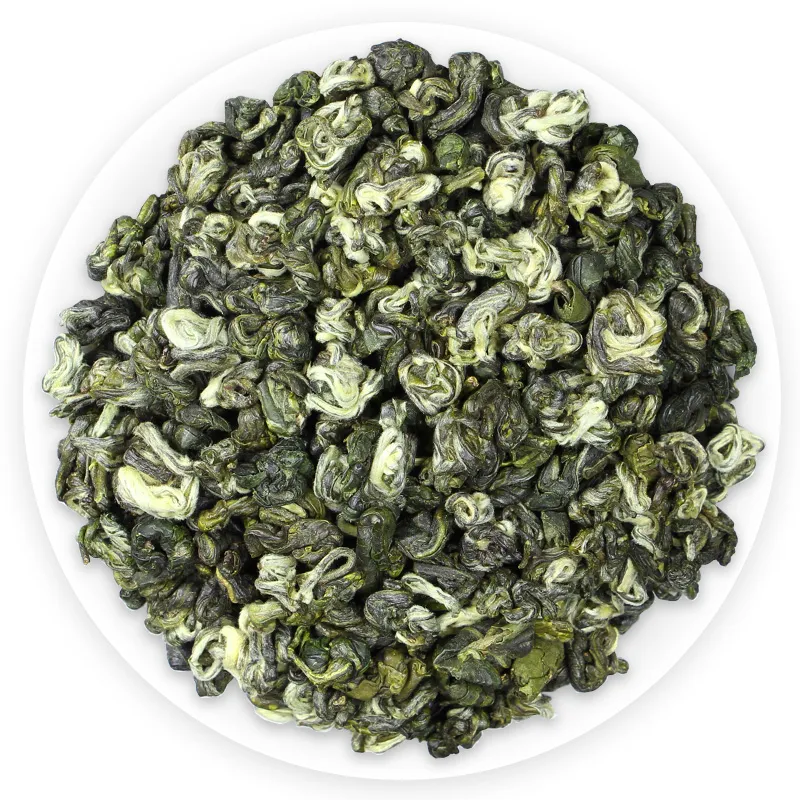
1. The Role of Shaping in Pan-Fired Green Tea
After fixation, the softened leaves are hand-rolled during pan-firing.
This process:
- Shapes the leaves
- Locks in aroma
- Improves durability in brewing
The spiral form is functional, not decorative.
2. Why Spiral Specifically?
Biluochun leaves are:
- Very tender
- Small and soft
During hand rolling, they naturally curl into spiral shapes.
The name itself reflects this:
“Bi” (green)
“Luo” (spiral)
“Chun” (spring)
3. Structural Impact on Flavor
The rolled structure:
- Reduces surface exposure
- Slows release of compounds
- Creates gradual unfolding during brewing
This allows layered aroma and smoother taste.
4. Does Tight Rolling Mean Better Quality?
Not automatically.
High-quality Biluochun should look:
- Naturally curled
- Fine and tender
- Covered with white fuzz
Artificially tight or stiff rolling may indicate mechanical processing.
Final Thoughts
Why is Biluochun rolled into small spirals?
Because of:
- Pan-firing and hand shaping
- Tender leaf structure
- Aroma preservation
- Brewing performance
- Visual identity
Its shape is a result of craftsmanship and flavor logic — not accident.
The small spiral holds not just tea leaves, but the essence of early spring.
