Tea friends, this is the Site Owner.
Every time we talk about black tea, oolong, or Pu-erh, one word is unavoidable: fermentation. Some say black tea is fully fermented and gentle on the stomach. Others say dark tea is post-fermented and gets better with age. Still others say oolong is semi-fermented, with green leaves and red edges.
All true.
But if you ask further: "What does 'fermentation' actually mean?" – Is it like dough rising with bacteria? Is it like wine bubbling with yeast?
Even seasoned tea drinkers often pause.
Today, let's dissect the most frequent and most misunderstood term in the tea world. By the end, you'll realize that tea's 'fermentation' is fundamentally different from the fermentation you know.
1. Cold Truth First: "Fermentation" in Tea Is a Historical Misnomer
This might surprise you, but it's true: Modern tea science has long confirmed that what we commonly call tea 'fermentation' is, in the vast majority of cases, not microbial fermentation at all – it's "enzymic oxidation."
What does that mean?
Take a green apple. Bite into it – it's sour and astringent. Leave it on the table for half a day; the flesh turns yellow, the taste becomes sweet. That's not bacteria working; it's the apple's own enzymes reacting with oxygen in the air.
Tea's "fermentation" works exactly the same way.
When tea makers roll the leaves, cell walls rupture. The tea's own polyphenol oxidase is released, meets the polyphenols, and encounters oxygen – an invisible oxidation reaction begins. Chlorophyll breaks down, theaflavins and thearubigins form, grassy aroma dissipates, floral and fruity notes emerge.
This is what "fermentation" really means in the six tea categories. It's not foreign microbes doing the work; it's the tea leaves "ripening" themselves.
That's why in academic English literature, scholars carefully note that this so‑called "fermentation" is actually enzymic oxidation – a historical misnomer.
Site Owner's Take: You've been drinking "fermented tea" for twenty years, but you've actually been drinking "oxidized tea." No need to change the name, but you must understand the truth.
2. The Six Tea Categories: A Spectrum of Oxidation
Now that we know tea's "fermentation" ≈ "enzymic oxidation," we can arrange the six tea categories along a clear spectrum – from 0% to 100%.
🟢 Green Tea: Non‑Fermented (Oxidation <5%)
Fixation (sha qing) is the soul of green tea. High heat rapidly inactivates polyphenol oxidase, stopping oxidation in its tracks. Green tea is about "freshness preservation" – the flavor you taste is almost identical to the freshly picked leaf. Hence green tea is cool, fresh, crisp, and doesn't age well.
⚪ White Tea: Micro‑Fermented (Oxidation 5%-15%)
White tea is neither fried nor rolled; it relies on slow, natural withering for gentle enzymic oxidation. This light oxidation produces a sweet, honey‑like charm while preserving the leaf's original liveliness. White tea is the "whisper of time" – fresh and elegant when young, mellow and smooth when aged.
🟡 Yellow Tea: Lightly Fermented (Oxidation 10%-20%)
Yellow tea adds one extra step to green tea: "sealed yellowing" (men huang). After fixation, the leaves are piled and covered with a damp cloth. Under heat and humidity, chlorophyll degrades, xanthophylls appear, and polyphenols undergo partial non‑enzymic oxidation. Yellow tea is about "sweetness through suffocation" – bitterness fades, sweetness rises. Sadly, it's now rare.
🔵 Oolong Tea: Semi‑Fermented (Oxidation 15%-70%)
Oolong's oxidation is a controlled dance. The bruising process (zuo qing) – alternating shaking and resting – damages the leaf edges first. Oxidation starts from the rims, creating the iconic "green leaves with red edges." Oxidation level determines aroma style – lightly oxidized (e.g., Qingxiang Tieguanyin) yields soaring floral notes; heavily oxidized (e.g., Oriental Beauty) gives ripe fruit and honey depth.
🔴 Black Tea (Hong Cha): Fully Fermented (Oxidation 80%-100%)
Black tea is the endpoint of enzymic oxidation. Rolling thoroughly ruptures cells; polyphenol oxidase and polyphenols mingle freely with oxygen, almost completely transforming into theaflavins, thearubigins, and theabrownins. Black tea is a "warm, red infusion" – irritants are greatly reduced, the liquor is bright red, and the taste is sweet and mellow.
⚫ Dark Tea (Hei Cha): Post‑Fermented (Microbial, Non‑Enzymic)
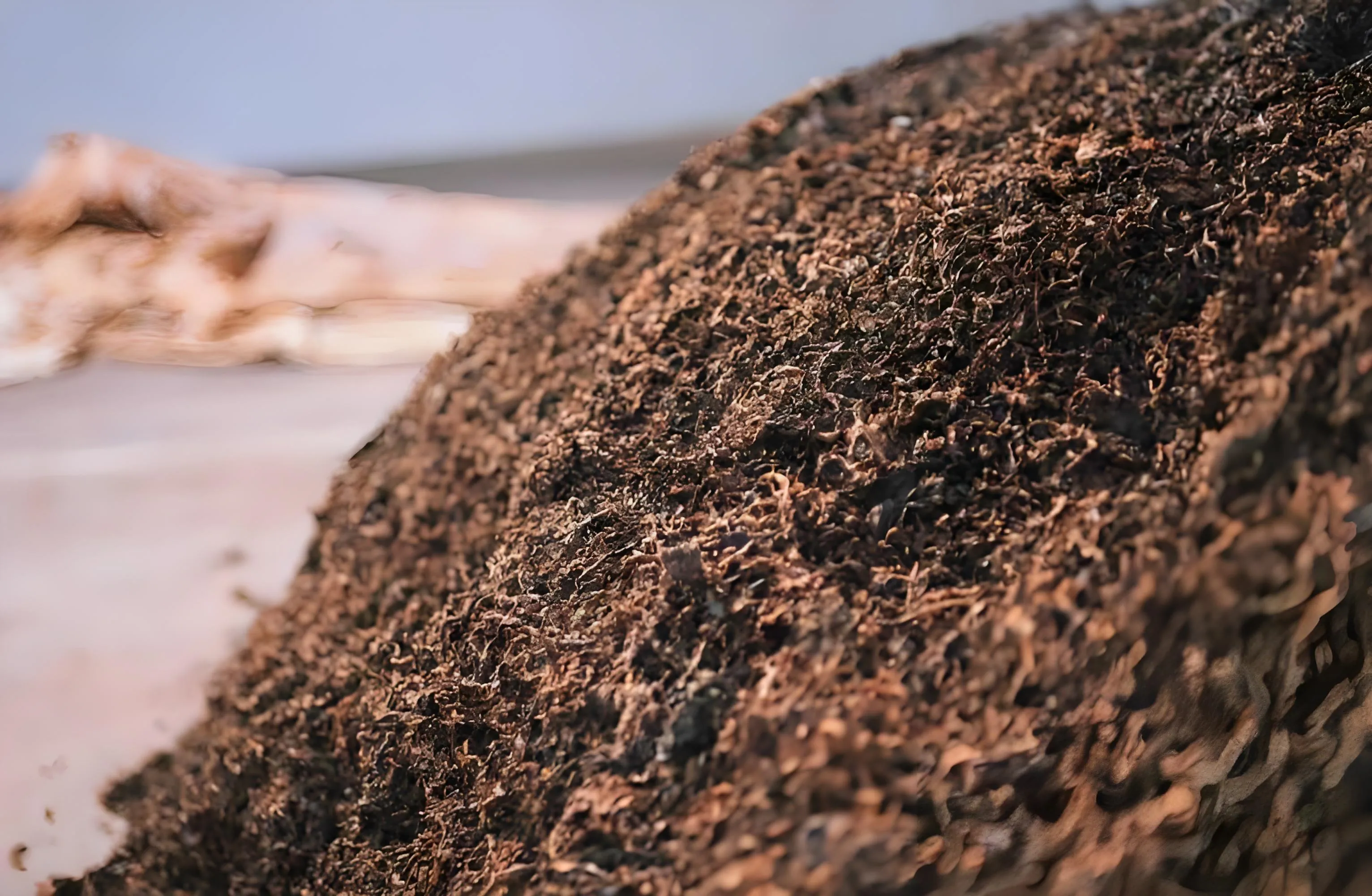
Dark tea is the outlier. Its "fermentation" follows a completely different logic from the previous five categories. Dark tea doesn't rely on the tea's own enzymes; it depends on exogenous microorganisms. During the piling process (wo dui), Aspergillus, Penicillium, and yeast proliferate, secreting extracellular enzymes that thoroughly transform the tea. This is genuine microbial fermentation, the same brotherhood as winemaking, bread‑rising, and yogurt‑culturing.
That's why the academic community calls dark tea's process post‑fermentation – to distinguish it from the enzymic oxidation of the other five categories.
Site Owner's Summary: From green tea to black tea, it's a continuous spectrum of enzymic oxidation. Dark tea runs on a separate track.
3. Dark Tea's Post‑Fermentation: The Real Fermentation
If tea's "fermentation" is mostly a misnomer, why does dark tea legitimately carry the banner of "true fermentation"?
Because its principle is exactly the same as the bread, yogurt, and beer you know.
Dark tea's wo dui process – sun‑dried raw tea is sprinkled with water, piled up, covered to maintain high temperature and high humidity. Microorganisms (mainly Aspergillus niger, Penicillium, yeast) multiply rapidly, secreting cellulase, pectinase, polyphenol oxidase, and other extracellular enzymes. They thoroughly decompose and reconstruct the tea leaves.
This process:
- Drastically reduces polyphenols, eliminating harshness;
- Degrades cellulose, increases soluble polysaccharides, making the liquor thick and smooth;
- Hydrolyzes proteins, diversifying amino acids;
- Generates abundant gallic acid, statins, and other compounds known for reducing lipids and aiding digestion.
This is fermentation in the truest sense – microbial participation, diverse metabolites, thorough material transformation.
Site Owner's Honest Take: Dark tea is the most underappreciated gem in Chinese tea science. It's not the odd one out among "fermented teas"; it's the only tea that fully deserves the name "fermented tea."
4. Fermentation Degree and Tasting: Don't Be Fooled by Numbers
You often see marketing claims: "This tea is 30% fermented," "That tea is 70% fermented."
Truth be told: 99% of these numbers are pure guesswork.
Tea isn't an industrial product. No sensor can instantly measure "fermentation degree." Master tea makers rely on touch, sight, and decades of experience – observing leaf color, smelling the aroma, feeling the leaf temperature. That so‑called "30%" is an experienced artisan's intuitive estimate, not an instrument reading.
So next time, don't ask "What's the fermentation degree?" – that's the most amateur question. Instead, ask:
- Was this oolong heavily bruised?
- Is this black tea CTC or traditional Gongfu?
- How many years has this dark tea been piled?
Ask about the process – that's what insiders do.
5. Summary: Two Kinds of "Fermentation" – One Clear Table
| Category | Essence | Dominant Agent | Representative Teas | Familiar Analogy |
|---|---|---|---|---|
| Enzymic Oxidation (commonly called "fermentation") | Tea's own enzymes catalyze polyphenol oxidation | Polyphenol oxidase, peroxidase | Black tea, Oolong, White tea, Yellow tea | Apple browning, raw Pu‑erh aging |
| Microbial Fermentation (post‑fermentation) | Exogenous microbe metabolism and transformation | Aspergillus, Yeast, Penicillium | Dark tea (ripe Pu‑erh, Fu brick, Liubao) | Winemaking, bread‑rising, yogurt |
So, what does "fermentation" mean in tea?
My answer: In the tea world, the word "fermentation" is poured into two completely different bottles.
- One bottle holds enzymic oxidation – a conspiracy between tea leaves and oxygen, the creator of red infusions and green‑leaves‑red‑edges.
- The other bottle holds microbial fermentation – a dance between microflora and time, the magician behind mellow body, aged aroma, and grease‑cutting power.
Both bottles are labeled "fermentation," but what's inside is worlds apart.
As a tea drinker, you don't need to memorize every chemical equation. But you do need to know: When you drink black tea, you're tasting the tea's own transformation. When you drink ripe Pu‑erh, you're tasting the dedication of microbes.
Remember the Site Owner's words: Tea's fermentation – one is self‑cultivation, the other is salvation by others. Grasp this distinction, and the gate to tea wisdom swings open.
