Hello tea friends, it's your webmaster here.
I get this question almost every day: “I'm a complete beginner. Should I buy raw or ripe Pu-erh for my first try?”
Today, let's tackle this head-on. I'll share my years of experience and even some mistakes I made, so you can start your Pu-erh journey on the right foot.
1. First Things First: Know the Difference
Before deciding, you need a quick refresher on raw vs. ripe (check my previous article for details):
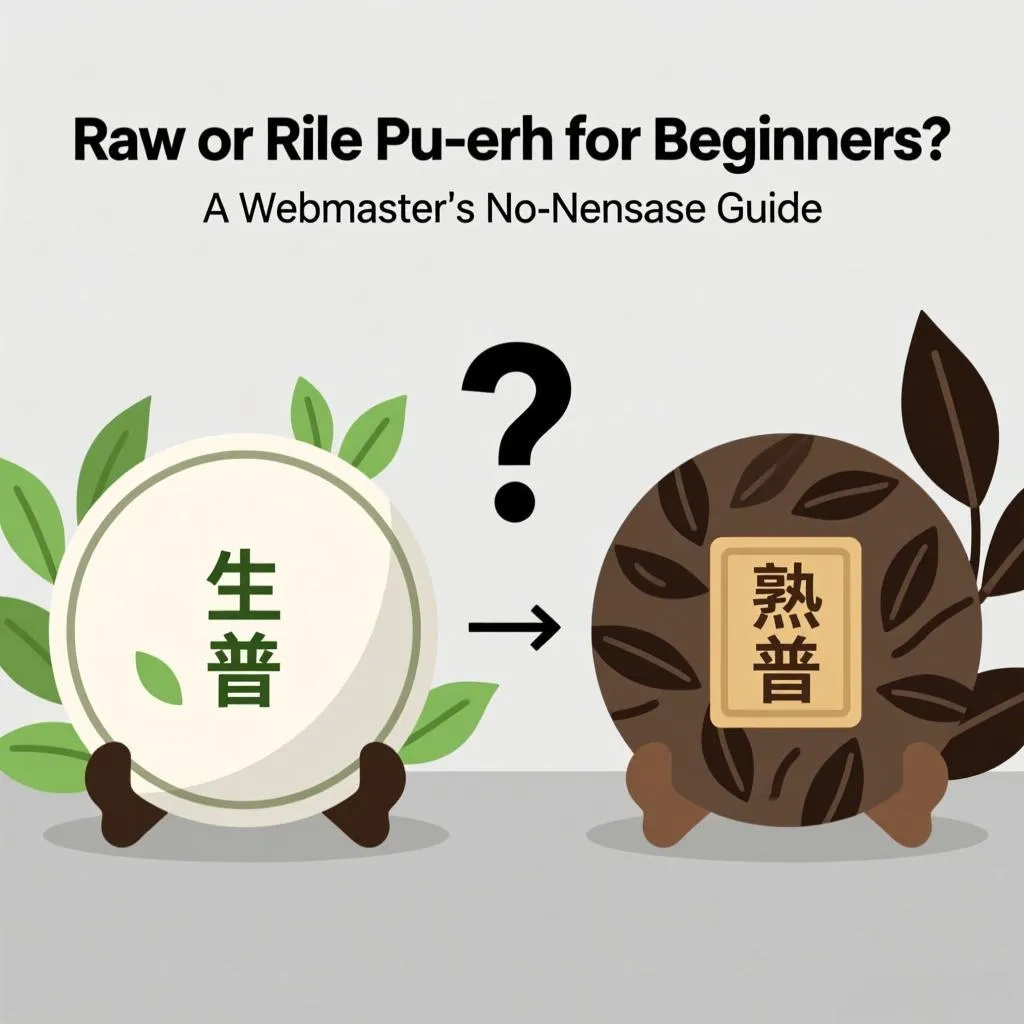
- Raw Pu-erh (Sheng) : Made like sun-dried green tea—no artificial fermentation. Young raw tea is fresh, brisk, often bitter and astringent. It transforms over years of aging.
- Ripe Pu-erh (Shou) : Undergoes artificial pile-fermentation (wo dui), which speeds up the aging process in weeks. It's mellow, smooth, with almost no bitterness, and ready to drink immediately.
Think of raw as a rebellious teenager and ripe as a gentle, warm-hearted adult.
Which one would you like to meet first?
2. My Strong Suggestion: Start with Ripe Pu-erh
Here’s why I always point beginners toward ripe Pu-erh:
1. Beginner-Friendly Flavor
Many newbies take their first sip of young raw Pu-erh and exclaim, “Whoa, this is bitter—like medicine!” And that’s the end of their Pu-erh adventure.
Ripe Pu-erh, with its low bitterness and smooth, almost creamy texture (often with dates or woody notes), is much easier to like right away.
2. Gentle on the Stomach
Young raw Pu-erh is cooling and can cause stomach discomfort if drunk on an empty stomach or by those with sensitivity. Ripe Pu-erh is warm and soothing, even helps digestion. It suits most people's constitutions.
3. Ready to Drink Immediately
Raw Pu-erh's magic lies in aging, but beginners may not yet appreciate aged flavors. Ripe Pu-erh is finished product—just break off some leaves and brew. No waiting required.
4. Less Risk of Being Cheated (If You Pick Right)
Ripe Pu-erh processing is more standardized, and reputable brands offer consistent quality at fair prices. Raw Pu-erh, on the other hand, is a minefield of regions, tree ages, processing tricks, and storage claims—easy for newcomers to get ripped off.
3. If You Insist on Raw Pu-erh, Here's How to Survive
Some people love a challenge, or they come from a green tea background and want to dive straight into raw. If that's you, follow these survival tips:
- Avoid Very Young Tea, Go for Aged : Look for raw Pu-erh that's been stored for at least 3–5 years. It'll have less bitterness, a redder liquor, and smoother taste. Ask vendors: “Do you have any aged raw Pu-erh?”
- Stick with Major Brands and Classic Recipes : Brands like Xiaguan, Dayi, and LaoTongZhi make reliable, mass-produced raw Pu-erh that's not too extreme.
- Brew It Light and Quick : Beginners tend to over-steep. Use less leaf (say, 5g), slightly lower water temperature (around 95°C), and pour out the first few infusions quickly to avoid overwhelming bitterness.
- Have Some Snacks Handy : If the tea feels too strong, nibble on some pastry or nuts to balance it out.
4. Webmaster's "Starter Pack" Pu-erh List
If you don't want to overthink, just pick from these budget-friendly classics:
Ripe Pu-erh Starter Picks:
- Dayi 7572 (the benchmark ripe, balanced and affordable)
- Xiaguan Xiao Fa Tuo (unique smoky note, beloved by old-timers)
- LaoTongZhi 9978 (great value, smooth and mellow)
Raw Pu-erh (for curious beginners):
- Xiaguan Jia Ji Tuo (classic daily drinker, better with a few years of age)
- Dayi 7542 (the raw benchmark, try an aged version)
- Rongshi Ben Wei Da Cheng (sweet and gentle, from Lincang region)
5. Conclusion: Ripe Is the Gateway, Raw Is the Path
For a true beginner, I strongly recommend starting with ripe Pu-erh.
Ripe Pu-erh gives you an immediate, comfortable taste of what Pu-erh is all about—mellow, smooth, and satisfying. You'll actually enjoy it and want to explore further. Once you're familiar with ripe, you can venture into aged raw Pu-erh to experience complexity and transformation—that's when you truly enter the world of Pu-erh.
If you're adventurous and love brisk, green-tea-like flavors, you can try a milder raw (like 5+ years aged) , but never on an empty stomach.
One final thought: There's no right or wrong in tea—only what suits you.
Follow my advice, let ripe Pu-erh open the door, and later, drink whichever mountain or vintage you like. Enjoy the journey!
