Why Does Tea Make People Feel So Calm? (It's Not Magic, It's Science)
English Page Name
tea-and-calm/why-does-tea-make-people-feel-calm.html
The Truth: It's Not You Quieting Down, It's Your Sensory Channels Switching.
Ever had this experience? Your mind is a tangled mess, work is chaotic, life is overwhelming. It feels like your brain is a buzzing group chat with endless notifications. But the moment you sit down, boil water, set out your teaware, watch hot water hit the leaves, and steam carries the aroma upward—the world suddenly gets muted.
Don't get it wrong. The traffic outside is still there. Your work chat is still pinging. But you feel quiet.
Today, let's dissect this magical "tea table mute button" and see how it's pressed. This isn't mysticism. It's a carefully orchestrated "sensory coup."
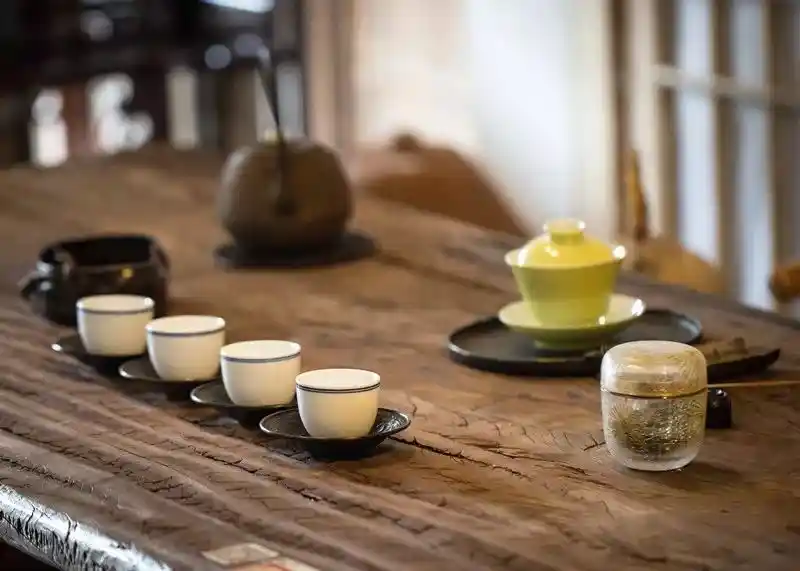
Part 1: The "Forced Pause" of Action – Your Anxiety Gets Kidnapped by Procedure
When you decide to "make some tea," you willingly step into a designed "deceleration procedure." This procedure naturally rejects "haste."
The Dimensional Downgrade from "Multi-tasking" to "Single-tasking":
- You can't elegantly warm a cup and pour water while in the middle of a furious argument. The act of brewing tea demands you temporarily set aside other tasks (even just mentally) and focus on this simple set of actions. Your brain is pulled back from the edge of "multi-tasking"崩溃 to the comfort zone of "single-tasking."
The "Mental Clearing" Effect of Ritual:
- Warming the pot, adding leaves, pouring water, timing the steep… These repetitive, stable, slightly ritualized actions are like mental calisthenics. They don't require you to think "what's next?" Muscle memory takes over. This "predictable rhythm" is inherently soothing. Anxiety stems from fear of the uncertain, and the tea brewing procedure offers a brief journey of high certainty and safety.
The "Physiological Brake" of Small Sips:
- Tea isn't for gulping. It's hot, you must blow on it. It's flavorful, you must savor it. This sip-by-sip rhythm forces your breathing to slow down and your swallowing to become deliberate. Your body slows, and the wild horse of emotion naturally gets reined in.
Part 2: The "Focal Convergence" of Senses – Your Attention is Gently Hijacked
Quietness, in essence, isn't about less external noise, but about the internal "noise" being blocked. Tea is a master "attention hijacker."
Visual "Dynamic Meditation":
- Watching leaves swirl, unfurl, sink, and float, observing the liquor's color shift from light to dark and back. Your eyes are captured by a soft, dynamic, non-threatening visual. It's like an "eye spa" for your brain, freeing it from the fatigue of processing complex text and images, letting it enter a relaxed, almost "zoning out" state. When your vision has an anchor, your mind finds it harder to scatter.
Olfactory "Direct Calming":
- This has science behind it! Many aromatic compounds in tea (like linalool) have been studied for their potential calming and anti-anxiety effects. When you inhale that wisp of tea fragrance, you're not just enjoying it; you might be undergoing "aromatherapy." Deep breathing itself is the best switch to activate the parasympathetic nervous system (responsible for rest and relaxation).
Gustatory "Micro-Exploration":
- Drinking tea isn't about quenching thirst; it's an "expedition." You discern sweetness, umami, mellowness, briskness, and feel where the aftertaste lingers. This exploration requires highly concentrated,细微的 attention. All your CPU resources are called up to analyze taste signals, leaving no spare capacity to process mental drain like "was my boss criticizing me just now?"
Your eyes, nose, and tongue—the three biggest information receptors—are all "contracted" by one cup of tea. The disturbances of the external world are naturally put on "mute" temporarily.
Part 3: The "Barrier Generation" of Psychology – You Create a Safe Zone for Yourself
This is the core magic: Tea drinking creates a "temporary sacred space" psychologically.
Temporary Identity Shedding:
- The state of "I'm drinking tea" allows you to temporarily step out of social roles like "the anxious employee," "the frantic parent," or "the tired partner." Within this barrier, your identity can simply be "a person tasting tea." Role burdens are temporarily shed, and so is the pressure.
The Changed "Texture" of Time:
- In daily life, time is a whip chasing us. At the tea table, time becomes an object to be observed and savored. Over the ten-plus minutes from a strong first steep to a weak last one, you clearly perceive the flow and change of time, rather than being dragged by it. This "sense of control" is a potent antidote to anxiety.
Permission for "Doing Nothing":
- In modern society, "doing nothing" induces guilt. But "drinking tea" provides a supremely legitimate, even tasteful, reason for "doing nothing." "I'm tasting tea, I'm calming my mind" sounds much more justified than "I'm spacing out." Tea is your psychological amulet for "legitimately doing nothing."
Part 4: The Hard Science – The "Paradox" of Caffeine
Some might argue: But tea has caffeine! Isn't that stimulating? How does it bring calm?
Great question! This touches on the "dose and mindset paradox" of caffeine's effects.
- Gentle Awakening, Not Jarring Stimulation: Compared to coffee, the caffeine in tea is bound with polyphenols (especially L-theanine), leading to a milder, more sustained release. It provides "alert relaxation"—clearing away physical fatigue and sharpening the mind without triggering the over-excitement ("jitters") coffee sometimes can.
- "Fuel" for Focus: Moderate caffeine boosts your baseline alertness, making it easier to enter and maintain the "sensory focus" state mentioned above. It provides a clear backdrop for your focused tasting, rather than creating new chaos.
In short: Tea uses caffeine to wipe the dust off your window (clearing fatigue), allowing you to appreciate the view outside (focus on the present) more clearly and calmly, rather than tearing the window out to let in a gale (over-stimulation).
Final Verdict: Calm is a "Sensory Vacation" You Give Yourself
So, tea brings calm not through a single reason, but through a "combo move":
- Behaviorally: Using ritual to force you to hit pause.
- Sensorily: Using color, aroma, and taste to completely "hijack" your attention, blocking mental noise.
- Psychologically: Carving out a protected, permission-granting space for you to relax.
- Physiologically: Using gentle caffeine and potential aromatic compounds to provide a clear backdrop and soft support for this calm.
This is, in essence, a "gentle intervention" you actively initiate against your own chaotic inner world.
Tea has no magic. The real magic lies in your willingness to take ten minutes, and through this cup of water and few leaves, have a brief date with yourself. During this time, you dial down overreactions to the external world and turn up the delicate awareness of your internal sensations.
Next time your mind feels like a tangled mess, don't order yourself to "calm down." That only creates more anxiety. Instead, say: "I'm going to make some tea." Then, let this ancient,自带静音系统的 ritual naturally guide you back to that long-lost, quiet self.
True quiet isn't the absence of sound, but the absence of turbulence within.
