The previous explanation of the aftertaste was relatively simple; this one will explain it in detail.
Hello tea friends, this is the Site Owner. Today, let's set aside talks of terroir and tree age, and focus on an experience sought by almost all tea lovers, yet one that seems somewhat intangible—Hui Gan. It's a term often used, but what exactly is it? Where does it come from? Today, I'll break it down for you in the clearest terms.
1. Hui Gan is Not “Sugar-Sweet”, But “Contrast-Sweet”
First, let's clarify. Hui Gan does not mean the tea liquor itself tastes sugary. On the contrary, Hui Gan often arises precisely after a hint of slight astringency or bitterness.
Here's the complete process:
- Initial Sensation: The tea enters your mouth. You might first perceive the slight puckering or bitterness from compounds like tea polyphenols (catechins) and caffeine.
- Transformation: As you swallow, saliva secretion increases in your mouth, interacting with the residual tea compounds.
- Emergence: Within seconds to a minute, the astringency or bitterness rapidly fades and dissipates (“transforms”). It is replaced by a clean, lingering sweetness that slowly rises from the back of your tongue and the base of your throat, often accompanied by a generous flow of saliva (known as sheng jin or "saliva production").
- Finale: This sweet, cool sensation can last for several minutes, leaving a refreshing, lingering finish that invites the next sip.
Simply put, Hui Gan is a contrast effect and a delayed reaction. It's the sweetness that follows bitterness, a marvelous process of "self-cleansing" and "reward" within your oral cavity.
2. Where Does Hui Gan Come From? A Scientific Deconstruction
This isn't metaphysical; it has a solid material basis.
- Core Substance: Tea Polyphenols (Catechins). They are the main contributors to astringency but also the "foundation" for Hui Gan. A layer of protein on our oral mucosa binds with tea polyphenols, forming a temporary, impermeable film. This film creates the brief, puckering sensation (astringency).
- Key Transformation: Film Breakdown & Receptor Exposure. This film is unstable and breaks down after a few seconds. Suddenly, the taste buds (especially those sensing sweetness) that were temporarily "blocked" are liberated, becoming highly sensitive.
Sources of Sweetness: A Dual Contribution. Simultaneously:
- The sweetness from the tea's own soluble sugars and certain amino acids (like theanine) becomes prominent once the masking astringency disappears.
- Saliva itself contains proteins that continue to interact with residual polyphenols, potentially generating similar sweet sensations.
- Synergistic Effect: Saliva Production. Hui Gan is almost always accompanied by sheng jin. The copious saliva not only washes away the astringency but also brings moisture and minerals, amplifying the sweet experience.
Therefore, the strength and duration of Hui Gan directly reflect the complex balance and quality of polyphenols (especially esterified catechins) relative to other flavor compounds (sugars, amino acids) in the tea leaf.
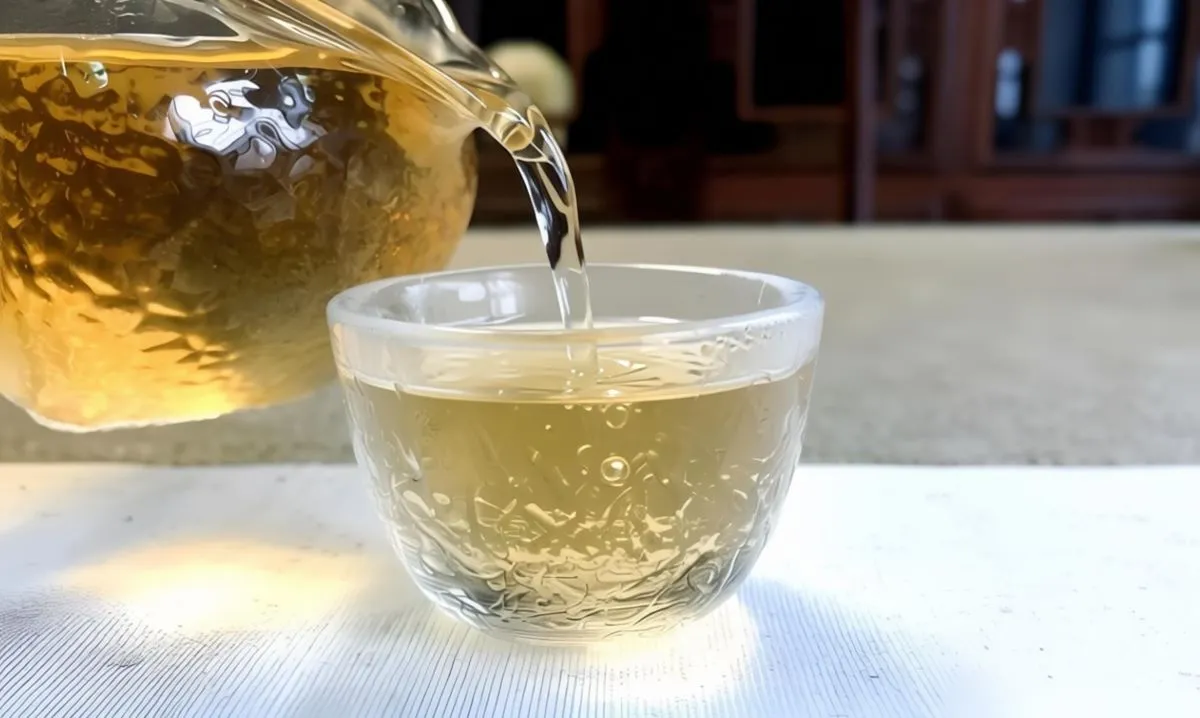
3. The “Personality” of Hui Gan Across Different Tea Types
Not all Hui Gan is the same; it has its own “character”:
- Green Tea: The Hui Gan is quick and refreshing, like a clear spring, often accompanied by distinct "bean" or "chestnut" aromas in the aftertaste—the breath of spring.
- Oolong Tea: The Hui Gan is persistent and layered. Wuyi Rock Tea's "rock rhyme" (Yan Yun) brings a mineral, deep, and powerful sweetness. Phoenix Dan Cong's Hui Gan intertwines with its myriad floral and fruity aromas, lingering enchantingly.
- Raw Pu-erh Tea: Hui Gan is central to judging its quality. The strong, robust Hui Gan of Menghai teas versus the soft, enduring Hui Gan of Yiwu teas are distinct characteristics. High-quality raw Pu-erh can generate a Hui Gan that rises from the deep throat, lasting a long time—this is called "throat feel" (Hou Yun).
- Black Tea: The Hui Gan is mellow and warm, often blending with honeyed or ripe fruit sweetness, offering a direct and comforting sweetness.
- White Tea: The Hui Gan is delicate, pure, and mellow. Especially in high-quality Silver Needle or White Peony, the Hui Gan carries a fresh, sweet character reminiscent of rock sugar water, accompanied by a delicate "hao xiang" (fuzz aroma).
4. How to Better Experience and Capture Hui Gan: A Guide from the Site Owner
- The Right Method: Take small sips, allowing the tea to fully coat your mouth. After swallowing, immediately close your mouth, exhale gently through your nose, and focus your attention on the base of your tongue and throat.
- Comparison is Key: Taste different teas consecutively, or different infusions of the same tea. Compare the speed, intensity, duration, and flavor profile (is it like rock sugar, honey, or fruit?) of their Hui Gan.
- Record Your Impressions: Don't just stop at "it has Hui Gan" or "it's sweet." Try to describe it: Is it a "fleeting sweetness" or a "layered, rising sweetness"? Is it "cooling" or "warming"?
- Beware of "Fake Hui Gan": Low-quality teas adulterated with sugar or licorice root will taste sweet immediately upon entry. This sweetness is superficial, cloying, and doesn't "transform." It lacks the "bitterness-to-sweetness" journey and may leave a sticky, unpleasant feeling or a tight throat.
Summary
So, what is Hui Gan?
It is the final testament of a good cup of tea, the touchstone of tea leaf quality, and the most delightful surprise in the tea drinking experience.
It tells us that the flavor of tea is not static but a living process that unfolds over time and evolves within the mouth. It is not merely a gustatory pleasure but a positive dialogue between your body and the tea.
Let's move beyond simply saying "this tea is sweet." Seek to feel the spring of sweetness after the astringency dissolves. Wait for that cool sensation rising from your throat. Savor the comfort of a mouth watering with freshness. When you can clearly capture and describe Hui Gan, you have truly opened a door to the world of professional tea appreciation.
Remember, Hui Gan is tea's gift, bestowed only upon those willing to wait patiently and savor attentively.
