1. Tea Tree Varieties
Many people believe that all tea comes from the same tea tree, but in fact, the source of tea leaves is not singular. Tea leaves primarily come from two varieties of the tea plant: Camellia sinensis var. assamica (the Assam variety) and Camellia sinensis var. sinensis (the China variety). These two tea tree varieties differ in appearance, aroma, and taste, which results in distinct characteristics in the tea produced from them.
- Assam Variety: Primarily found in regions like India, Sri Lanka, and Yunnan, this variety has larger leaves and is more suited for tropical and subtropical climates. Assam tea leaves usually have a strong, bold flavor, and they are often used to make black teas, such as Darjeeling and some types of Pu-erh tea.
- China Variety: This variety is mainly found in China, Taiwan, and Japan, with smaller leaves. The tea tree is adaptable to temperate climates. Teas from this variety tend to have a lighter, more delicate taste and are often used to make green tea, white tea, and oolong tea.
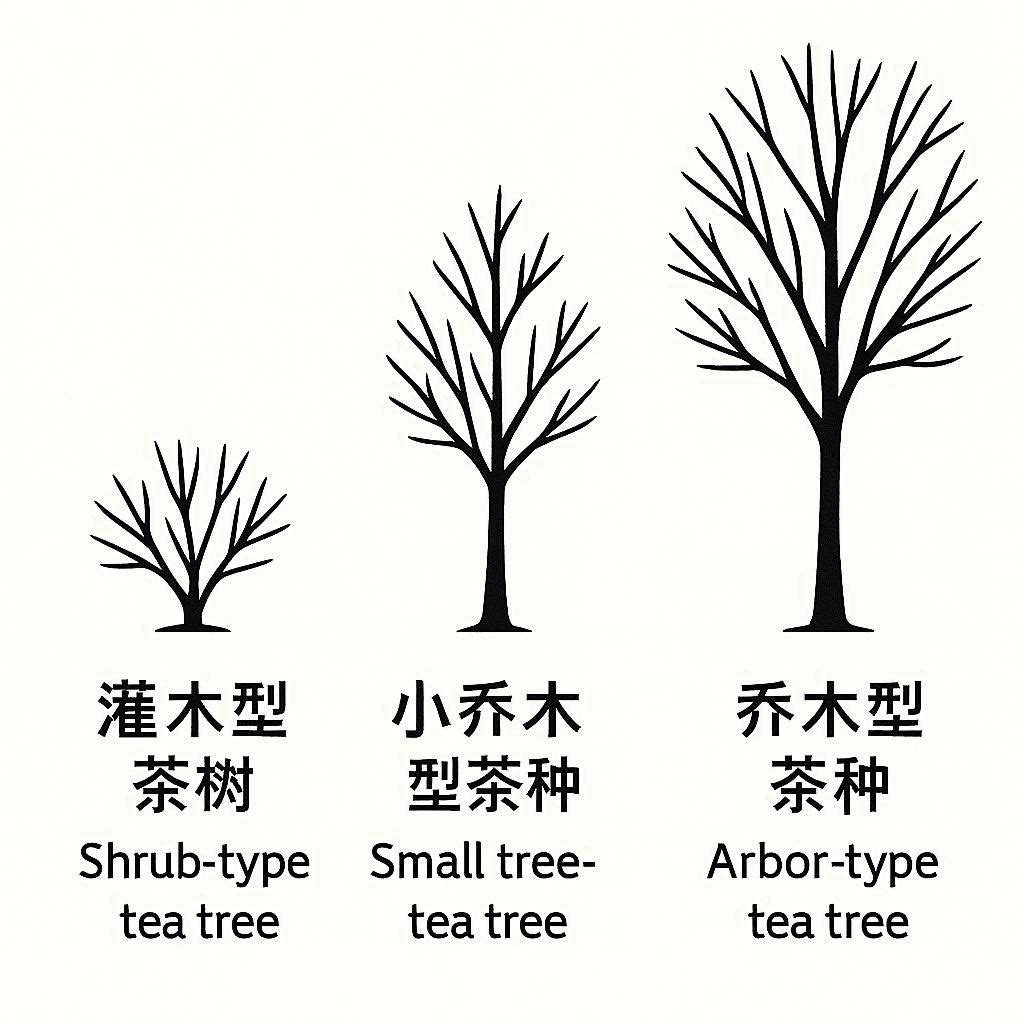 Did you notice the mistake in the picture? Haha, I'll fix it when I have time.
2. Origins of Different Teas
Although all teas come from the same species of tea plant, their flavor, color, and aroma vary widely due to different processing methods and the tea tree varieties used. Below are some common tea types and their origins:
- Green Tea: Typically made from young leaves of the China variety, green tea undergoes a quick steaming or pan-firing process to preserve its fresh flavor and natural aroma.
- Black Tea: Mostly made from Assam variety leaves, black tea undergoes complete fermentation, which gives it a strong, robust flavor.
- White Tea: Mainly made from the tender buds of the China variety, white tea is minimally processed and retains its natural, delicate flavor.
- Oolong Tea: Often made from a blend of Assam and China varieties, oolong tea undergoes partial fermentation, which gives it both floral notes from green tea and a rich body like black tea.
3. Tea Diversity
In addition to the Assam and China varieties, factors like growing environment, climate conditions, and soil composition play a role in determining the flavor and quality of tea. Different growing regions impart unique characteristics to the tea leaves, which is why teas from different parts of the world taste so different.
For example, China’s Longjing tea is famous for its fresh, grassy flavor, while India’s Darjeeling tea is known for its floral and fruity notes. The local climate, soil, and cultivation methods all influence the flavor of tea, making every tea-growing region special.
4. Conclusion
In conclusion, while all tea comes from the same species of tea plant, the different varieties of tea trees and processing methods create a wide range of tea types and flavors. From Assam to China varieties, from green tea to black tea, each type of tea has its unique characteristics and taste profile. Understanding the origins and varieties of tea allows tea enthusiasts to better appreciate and select the tea that best suits their palate.
