Tea friends, this is the Site Owner. In recent years, "Ancient Tree Tea" (Gushu) has spread from the Pu-erh circle to the entire Chinese tea world. Almost every new tea drinker asks me: "Do I have to drink Gushu to truly begin?" "Is plantation tea really undrinkable?"
Today, let's shatter this misconception completely. My conclusion might upset some vendors, but for the sake of your wallet and your tea journey, I must be honest: Beginners who buy Gushu will regret it nine times out of ten.
1. The "Pedestal" and the "Pitfalls" of Ancient Tree Tea
First, let's be objective: Ancient tree tea does have genuine merits.
The Real Value of Gushu:
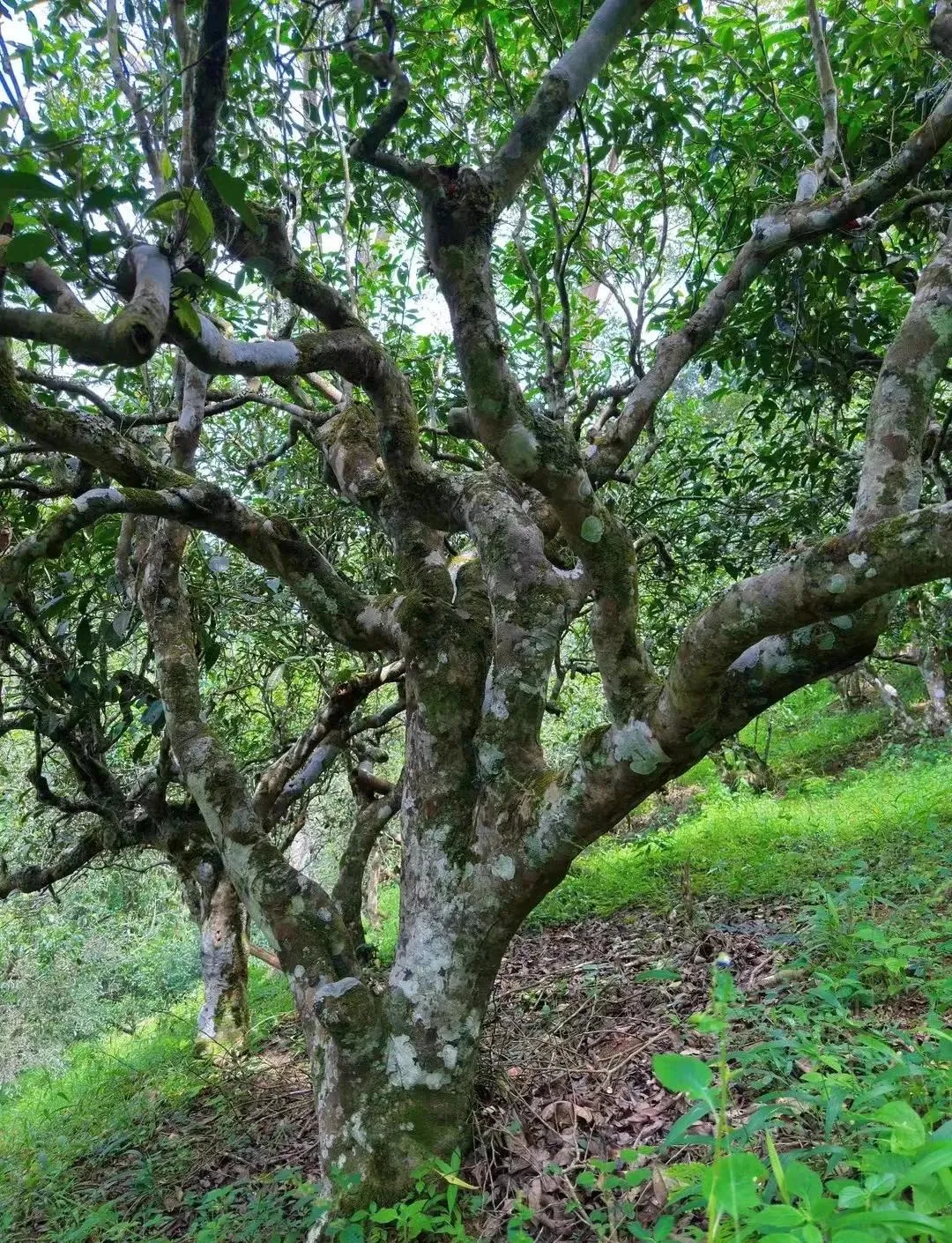
- Ecological advantage: Trees over a century old have deep root systems that absorb minerals from deep soil layers, resulting in richer inner substance.
- Flavor profile: Better balance of taste, astringency transforms easily, lasting Hui Gan and Sheng Jin, and the liquor is generally more delicate with deeper throat feel compared to plantation tea of the same age.
- Aging potential: Solid foundation, greater transformation potential over time.
However, these values have a prerequisite — what you drink must be authentic Gushu, properly processed, and reasonably priced. The reality is:
- Extremely low yield: Ancient tree tea accounts for only 3%-5% of Yunnan's total Pu-erh output, yet products labeled "Gushu" occupy half the market.
- Inflated pricing is the norm: Prices range from tens to tens of thousands of yuan per kilogram, and ordinary consumers simply cannot tell.
- High tasting threshold: The "delicacy," "throat feel," and "cooling sensation" of top-tier Gushu require considerable tasting experience to perceive.
Site Owner's Maxim: Gushu is not a智商税, but blindly chasing Gushu is most likely paying that tax.
2. Why Can't Beginners Taste the Value of Gushu?
This isn't meant to discourage you; it's physiological reality. Developing tasting ability, like learning a musical instrument or painting, requires ample sample accumulation.
Lack of a flavor reference system
- If you haven't yet understood "what normal plantation tea tastes like," you can't discern "what makes Gushu excellent."
- Analogy: You can't appreciate the richness of free-range eggs if you've never tasted a regular egg; you can't feel the refined suspension of a luxury car if you've only driven a budget model.
Misunderstanding "lightness"
- Many Gushu teas, due to the age of the trees, have a balanced ratio of caffeine and catechins. The entry is not a "punch" of bitterness, but a "transforming" sweetness. Beginners often mistake this for "weak" or "bland" and instead find the harsh bitterness of plantation tea more "powerful."
- It's not that the Gushu is lacking; your palate hasn't yet learned to wait.
Expectation gap breeds bias
- Spending a fortune on "Gushu," not understanding it, and concluding that "Gushu is all a scam." Closing the door on high-quality tea forever—this is the greatest loss.
3. The Site Owner's "Gushu Consumption Philosophy": Deploy by Need, Advance by Level
I don't oppose beginners trying Gushu, but I strongly advise: Adjust your purpose, control your dosage.
【Level 1: Cognitive Phase – Focus on "Daily Drinkers," Supplement with "Samples"】
- Mainly drink well-processed, reasonably priced daily teas from major categories (plantation/small-tree/garden tea) to build your "flavor baseline."
- Simultaneously, spend a few dollars on 3-5 infusions of authentic Gushu samples as a "control."
- Purpose: Not for you to "understand" it fully, but for you to "remember" it. Slowly build a vague impression of "delicacy," "persistence," and "throat feel" through comparison.
【Level 2: Experiential Phase – Try Entry-Level Gushu in Familiar Categories】
- When you can clearly distinguish "whether astringency transforms" and "how fast the Hui Gan comes," and you have developed a stable preference for a certain tea category (e.g., ripe Pu-erh, raw Pu-erh, white tea), you can buy small quantities of cost-effective, entry-level Gushu (such as Gushu ripe Pu-erh loose tea or Gushu white tea cakes).
- Rule: Don't chase famous mountains, don't stockpile whole pieces; start with less than 100g for tasting.
【Level 3: Advanced Phase – Purchase for Collection and Deep Appreciation】
- By now, you can independently appreciate the layered changes of a tea and have ample daily drinkers in your collection. Buying Gushu is for raising your tasting ceiling and aging collection.
- Only now can you speak of "necessity."
4. The "Three Don'ts" Mantra for Beginners Avoiding Gushu Pitfalls
- Don't deify: Gushu is a tool, not a religion.
- Don't follow blindly: Your friend's approval doesn't count; your own palate's understanding does.
- Don't stockpile: Beginners who hoard Gushu will likely end up with "tuition tea" a decade later.
Summary
So, should beginners buy ancient tree tea?
The answer is: No, it's not necessary, and it's not even recommended.
It's not that you're unworthy of Gushu; it's that Gushu hasn't yet earned a place with the current you. First learn to appreciate three-hundred-yuan tea, then talk about three-thousand-yuan tea. Use the humblest daily drinkers to build the most solid fundamental skills. The day you pick up a cup of Gushu and can't help but nod approvingly from the very first sip—that's when it truly becomes yours.
Remember the Site Owner's words: Ancient tree tea is a medal on the path of tea tasting, not the starting line.
