One of the most common questions among tea beginners is:
Is there a big difference between new white tea and aged white tea?
You may have heard sayings like “Three years medicine, seven years treasure.” But what does that really mean? Let’s break it down logically and practically.
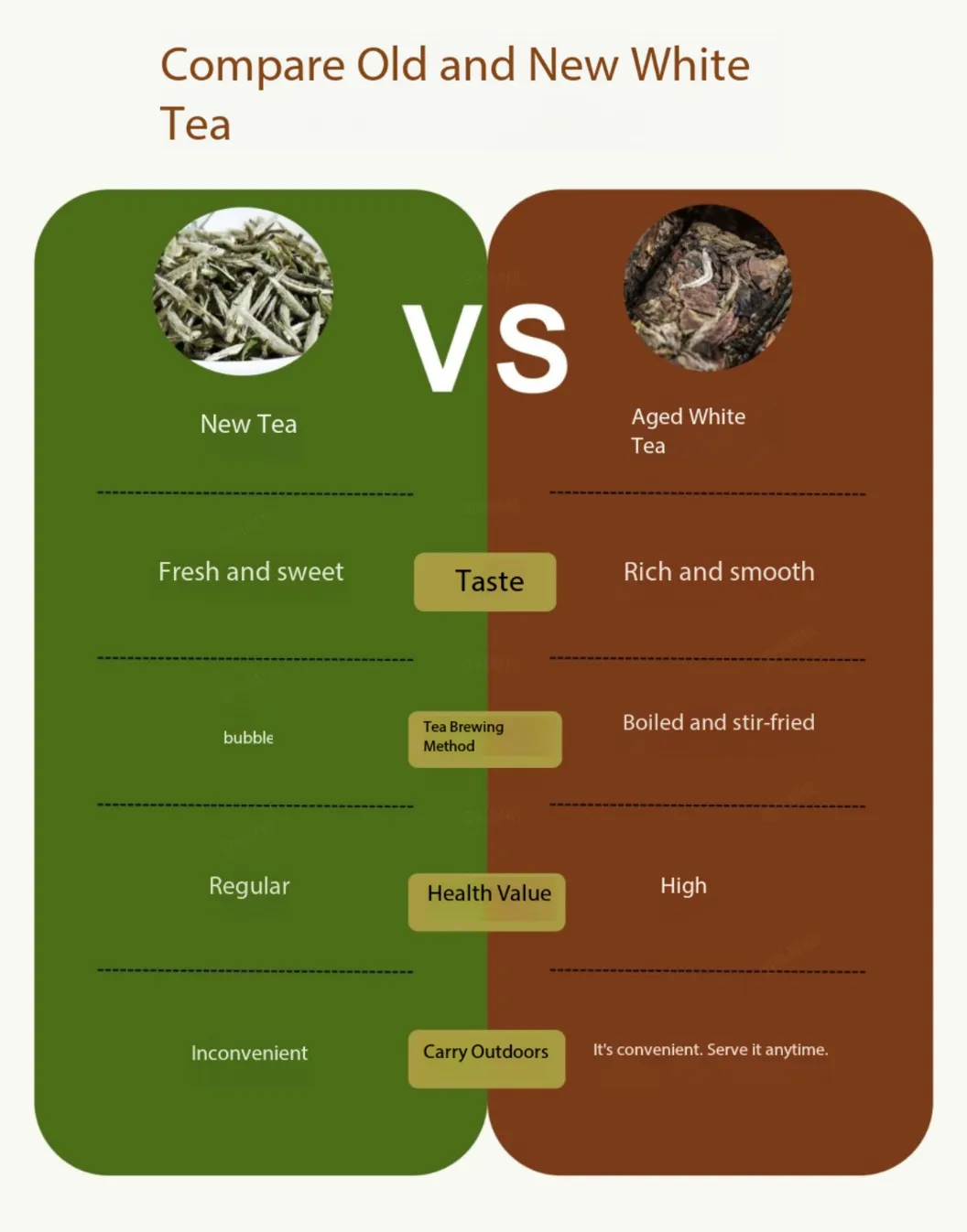
1. What Is New White Tea and Aged White Tea?
Generally speaking:
- New white tea: less than 1 year old
- Aged white tea: usually over 3 years old
White tea is minimally processed—mainly withering and drying. Because of this, it retains active compounds that allow it to continue transforming over time.
In short:
New white tea shows the character of freshness.
Aged white tea shows the character of time.
2. Flavor and Aroma Differences
New White Tea
- Aroma: fresh, floral, grassy sweetness
- Taste: light, refreshing, crisp
- Liquor: pale yellow
- Nature: relatively cooling
It feels bright and lively.
Aged White Tea
- Aroma: woody, medicinal, jujube-like (especially Shoumei)
- Taste: smoother, thicker, rounder
- Liquor: amber to deep golden
- Nature: milder and warmer
Aged white tea becomes softer and less sharp over time.
Simply put:
New white tea is about freshness.
Aged white tea is about depth.
3. Health and Chemical Changes
As white tea ages:
- Catechins slowly oxidize
- Flavonoids increase
- Astringency decreases
Many drinkers find aged white tea gentler on the stomach and more suitable for colder seasons.
However, it’s important to stay rational—white tea is a beverage, not medicine.
4. Price and Market Differences
Yes, aged white tea can be significantly more expensive.
Reasons include:
- Storage costs
- Time investment
- Limited supply
- Market demand
But beware of artificially aged or falsely labeled products. Age alone does not guarantee quality.
5. Which One Should You Choose?
It depends on preference:
- Prefer fresh floral notes? → New white tea
- Prefer smooth and mellow depth? → Aged white tea
- For daily drinking? → New white tea
- For winter comfort? → Aged white tea
There is no absolute “better.” Only what suits you.
Final Thoughts
So, is there a big difference between new and aged white tea?
Yes—especially in flavor and texture.
But quality depends more on raw material and storage than simply age.
Drink what feels right for you. Tea is about experience, not hype.
